Kids electric scooter safety starts before the first ride. The U.S. Consumer Product Safety Commission (CPSC) links riding toys to a large share of toy-related injuries in children. WebMD’s toy safety guide summarizes the CPSC advice on this. Most of those injuries are preventable with the right gear, surface, and supervision.
Battery-powered ride-ons add two more checkpoints: the battery and the charger. A loose battery cover or a careless charging habit turns a fun toy into a hazard. Parents in Dhaka and across Bangladesh face extra variables too, such as hot rooftops, tiled floors, and busy lanes outside the home.
This guide to kids electric scooter safety gives nine practical rules, grouped into five sections. It uses the Kids Premium Vintage Vespa Baby Electric Scooter as a working example. Its 3-wheel body and 6V battery show how safety features work in a real product.
You will learn how to match a scooter to your child, set up gear and supervision, pick safe riding zones, manage the battery, and run a quick pre-ride check.
Quick Answer: Kids electric scooter safety rests on five habits: choose a stable 3-wheel model that fits the child’s age, require a certified helmet on every ride, supervise within arm’s reach, ride only on flat indoor or enclosed surfaces, and charge the battery with an adult present using the original charger. Show Image
Kids Electric Scooter Safety Starts With the Right Scooter
Kids electric scooter safety begins with fit. The safest scooter matches your child’s age, height, and skill. A model that is too fast or too tall raises fall risk. A 3-wheel design adds stability for toddlers and early riders. Check the age label and the weight limit before you buy.
Tip 1: Match the Scooter to Age and Size
Age labels exist for a reason, and following them is the simplest kids electric scooter safety step. Toys follow standards such as ASTM F963 in the United States and EN 71 in Europe. Both set safety limits for toys by age group. Therefore, a toddler should never use a scooter rated for older children.
Size matters as much as age. Your child should sit with both feet reaching the footrest and both hands reaching the handlebar without stretching. If the child must lean forward or reach, the scooter is too big. For a deeper look at age fit, read our guide to a kids scooter for 2–5 years in Bangladesh.
Tip 2: Choose a Stable Three-Wheel Base
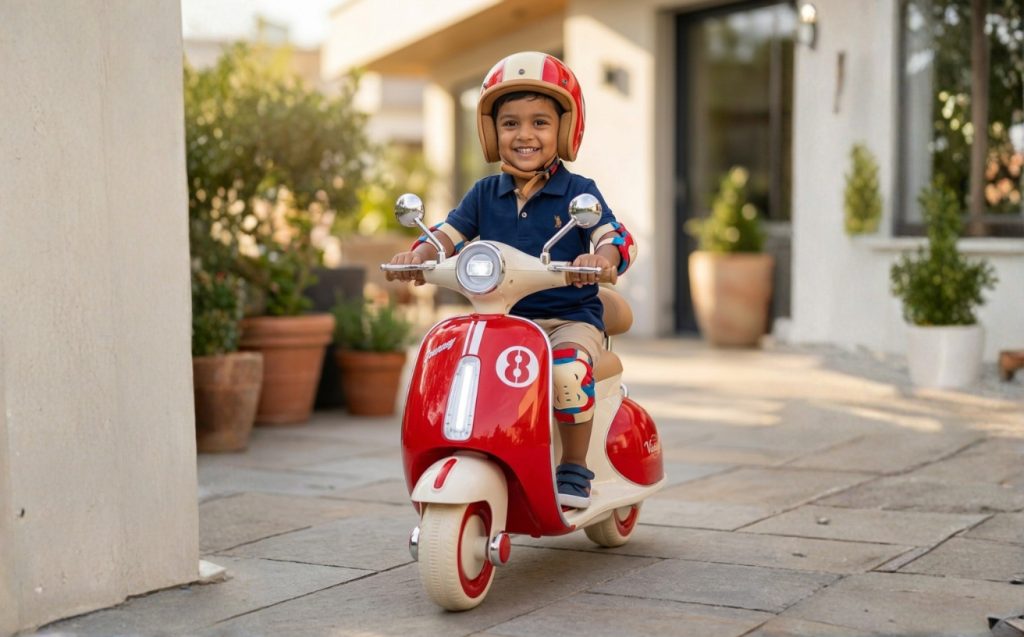
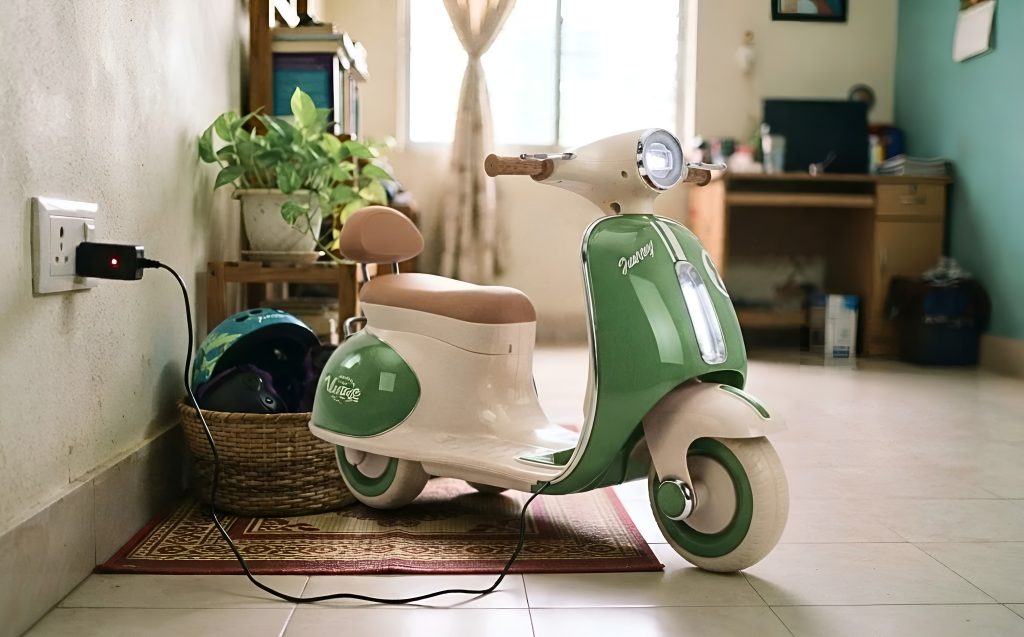
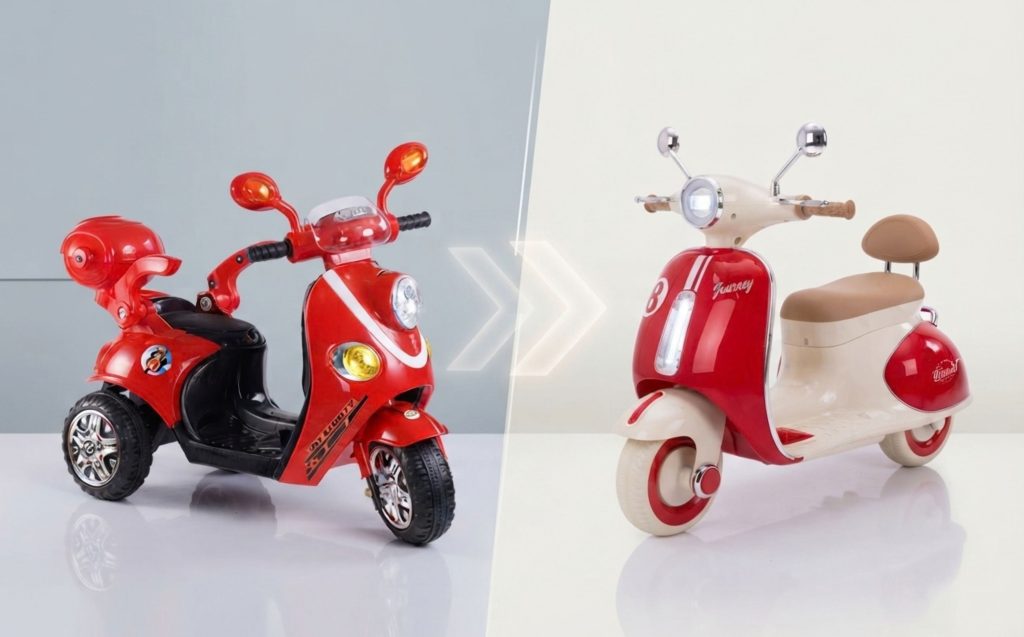
Three wheels spread weight across a wider footprint, so the scooter tips less during turns. The Vespa-style model above uses a 3-wheel stable design with a durable plastic body and a net weight of 7.5 kg. That low, wide base suits indoor play and flat outdoor areas.
However, stability does not replace kids electric scooter safety rules. Even a stable ride-on can tip on a slope or a kerb. Treat the wheel count as a head start, not a guarantee.
Gear and Supervision Rules for Kids Electric Scooter Safety
Kids electric scooter safety on every ride needs a helmet, close-fitting clothes, closed shoes, and an adult within arm’s reach. These controls cut the most common injuries: head impacts, tangled clothing, and unsupervised falls. Make them non-negotiable from day one.
Tip 3: Make the Helmet Automatic
Head injuries are the most serious risk on any riding toy, so the helmet anchors kids electric scooter safety. Safe Kids Worldwide notes that helmets meeting CPSC standards protect against skull fractures and severe brain injury. Look for a recognized certification label inside the shell, such as CPSC (16 CFR 1203) or EN 1078. Visit Safe Kids Worldwide for fitting guidance.
Fit matters. The helmet should sit level on the forehead, with the strap snug under the chin. Also set the rule early: no helmet, no ride. Children copy habits, so wear yours when you ride a bike nearby.
Tip 4: Supervise Within Arm’s Reach
Supervision completes kids electric scooter safety. Young children need direct supervision, not a glance from another room. Stay close enough to grab the handlebar or the child. Moreover, keep your phone down while your child rides.
Set one rider per scooter. The Vespa-style model has a seat with a back carrier, but treat it as a single-rider toy unless the manual says otherwise.
Tip 5: Dress for the Ride
Choose closed shoes, not sandals or slippers. Avoid long scarves, loose drawstrings, and dangling bag straps because they can catch in wheels. Knee pads help older children who ride outdoors. Show Image
Safe Riding Zones for Kids Electric Scooter Safety
The best riding zone for kids electric scooter safety is a flat, dry, enclosed area with a smooth surface and no stairs, water, or traffic. Indoors, clear a path. Outdoors, choose a fenced yard, a quiet compound, or a supervised play area. Surface choice affects control more than most parents expect.
Tip 6: Pick the Right Surface
Smooth tile, concrete, and sealed floors give steady wheel grip. Wet marble and polished tile are slippery, so wipe spills first. Gravel, sand, and broken pavement can jam small wheels and tip the scooter. Small plastic wheels also struggle on uneven ground, so avoid lawns with holes or bumps.
Electric ride-ons are not road vehicles. Keep them off streets, lanes, and parking areas. A child’s low seat height makes them hard for drivers to see.
Tip 7: Block Hazards Before They Appear
Hazard control is a core part of kids electric scooter safety. Walk the riding area first and block hazards. Close stair gates, shut balcony doors, and move cords, furniture corners, and breakable items. In many Bangladeshi homes, children ride on the rooftop. Therefore, check the roof edge, keep a solid parapet in place, and mark a riding zone away from the boundary.
Avoid water too. Never ride near a pool, a pond, drains, or wet bathroom floors. Rain makes surfaces slick and can damage electrical parts.
Battery and Charging Rules for Kids Electric Scooter Safety
Kids electric scooter safety around the battery means using the original charger, charging only with an adult present, and checking the battery cover before each ride. The CPSC treats battery-powered ride-on toys as a separate category with rules for battery access and circuit protection. Poor charging habits shorten battery life and raise risk.
Tip 8: Charge With an Adult and the Original Charger
Charging is the part of kids electric scooter safety that parents most often skip. Use the charger that came with the scooter. A mismatched charger can overheat a small battery. The Vespa-style model uses a 6V 4.5Ah battery with a 380 motor, so it needs a charger matched to those specs.
Charge in a dry, ventilated spot on a hard surface. Do not charge overnight or leave the charger unattended. Unplug once the battery reaches full charge. Our guide to kids electric scooter battery care covers charging cycles and storage in detail.
Tip 9: Inspect the Battery Before Every Ride
Check three things before the child sits down. First, the battery compartment must be closed and secure. Second, the charging port must show no damage or exposed wires. Third, the plastic body must have no cracks near the battery.
Stop using the scooter if you see swelling, a burning smell, or unusual heat. Contact the seller and keep the toy away from children until it has been checked. Also store the scooter in a cool, dry room, away from direct sun.
Pre-Ride Kids Electric Scooter Safety Checklist
A pre-ride kids electric scooter safety checklist takes about one minute and catches most problems before they cause harm. Run it every time, even if your child rides daily. The table below summarizes the checks, the reason for each, and who owns the task.
Check
What to look for
Why it matters
Who does it
Helmet
Snug fit, level on forehead, certified label
Protects against head injury
Parent
Shoes and clothing
Closed shoes, no loose straps
Prevents wheel entanglement
Parent
Battery cover
Closed and secure
Keeps battery parts away from the child
Parent
Charger and port
No frayed wire, no damage
Reduces overheating and shock risk
Parent
Wheels and body
No cracks, wheels spin freely
Prevents sudden tipping
Parent
Riding area
Flat, dry, no stairs, water, or traffic
Controls the biggest fall hazards
Parent
Supervision
Adult within arm’s reach
Allows a fast response to a fall
Parent
Rider
One child, seated, feet on footrest
Keeps balance and control
Child
Print this table and keep it near the charging spot. Moreover, teach older children to call out each item before they ride. That habit builds ownership and makes kids electric scooter safety feel like part of the game.
Frequently Asked Questions
What is the most important kids electric scooter safety rule?
The most important kids electric scooter safety rule is a certified helmet on every ride, paired with adult supervision within arm’s reach. Head injuries cause the most serious harm on riding toys, and a helmet plus close supervision addresses both prevention and quick response.
At what age can a child ride an electric scooter safely?
Age depends on the model, the child’s size, and the age label. Many 3-wheel ride-ons suit toddlers with an adult nearby, while two-wheel models suit older children. Kids electric scooter safety improves when you follow the label, check the weight limit, and judge your child’s balance first.
Is a 3-wheel electric scooter safer than a 2-wheel model?
A 3-wheel design is more stable for toddlers and beginners because it resists tipping at low speed. It still needs the full set of kids electric scooter safety habits: a helmet, a flat surface, and supervision. Two-wheel models suit older children who already show good balance.
Can kids ride an electric scooter indoors?
Yes, if the area is flat, clear, and free of stairs. Indoor riding is a common choice for compact ride-ons like the Vespa-style baby scooter. For indoor kids electric scooter safety, remove cords and sharp furniture corners, and block stairs and balcony doors.
How long should I charge a kids electric scooter?
Follow the manual for the exact charge time, because it depends on the battery. Charge with an adult present, use the original charger, and unplug once the battery is full. Avoid overnight charging to protect battery life and support kids electric scooter safety.
Kids Electric Scooter Safety Builds a Confident Rider
Safety rules do not take the fun out of a scooter. They give children room to ride with confidence, and they give parents peace of mind. A stable 3-wheel base, a certified helmet, a clear riding zone, and careful charging cover the biggest risks.
Start with the checklist above and repeat it until it becomes routine. Check the battery, walk the area, and stay close. Over time, your child will learn the rules, and kids electric scooter safety will become a habit rather than a lecture.