A six-volt scooter battery that dies within eight months usually failed for one avoidable reason: nobody followed a charging routine built for sealed lead-acid cells. Kids electric scooter battery care comes down to a handful of habits, not the price tag on the box, and getting those habits right can double how long a battery lasts.
Most parents only start paying attention to battery care after the scooter begins crawling instead of rolling. By that point, the battery has usually lost a chunk of its usable capacity for good, and a replacement becomes the only fix.
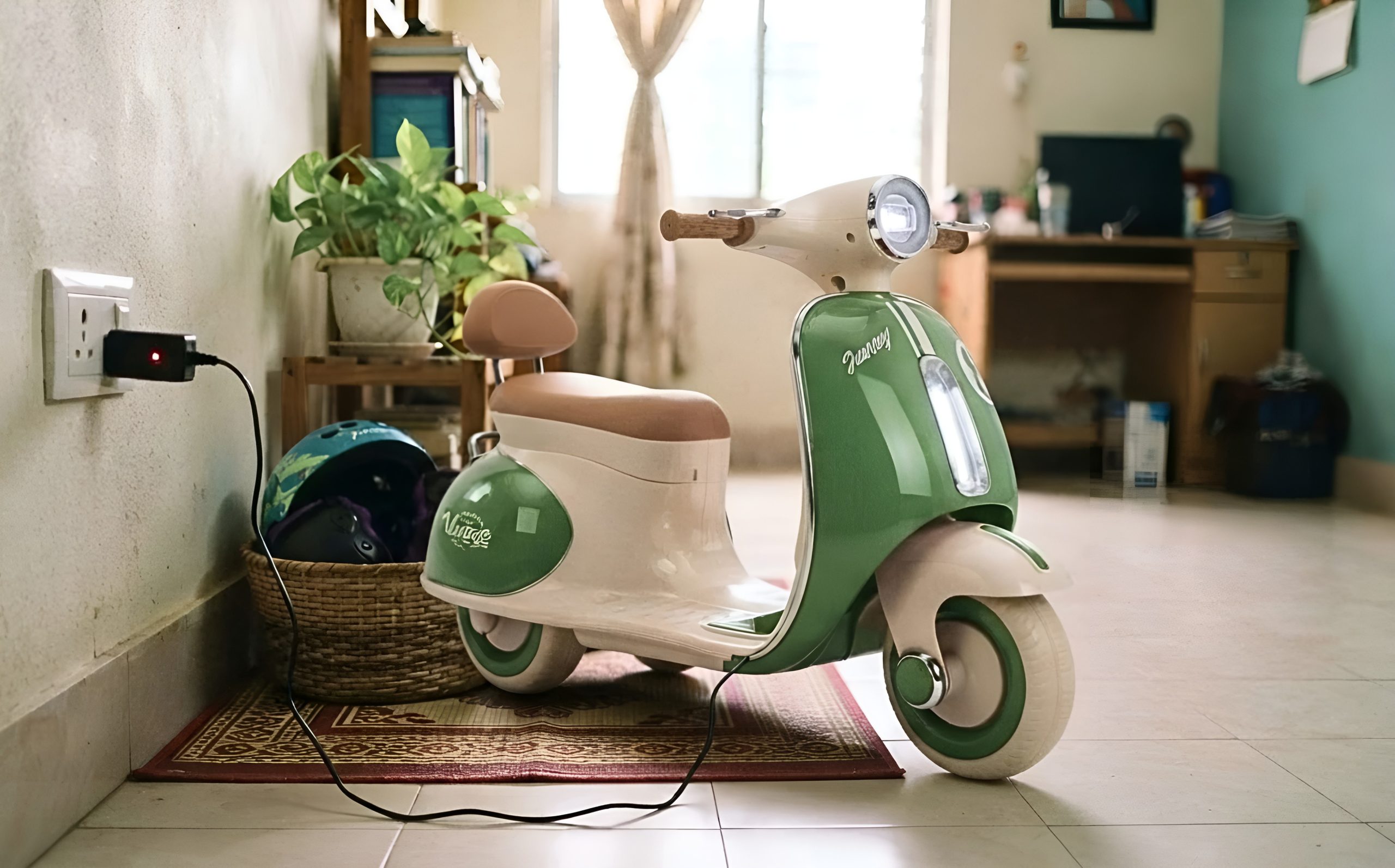
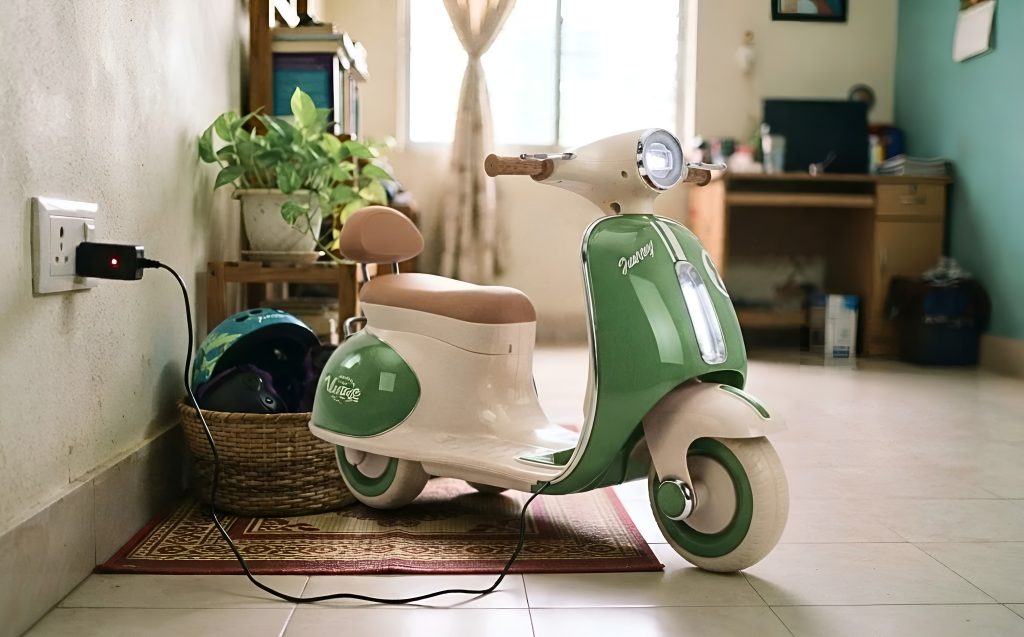
The good news is that sealed lead-acid batteries, the type used in almost every kids’ three-wheel scooter sold in Bangladesh, respond well to a simple routine. Charge fully, avoid deep discharge, and store the scooter correctly between uses, and the battery inside a model like the Kids Premium Vintage Vespa Baby Electric Scooter can hold up for years of regular play.
This guide walks through how these batteries work, the charging steps that protect battery life, the warning signs of a battery in trouble, and the mistakes that shorten ride time the fastest.
Quick Answer: Kids electric scooter battery care means fully charging the sealed lead-acid battery before first use, recharging after every ride rather than letting it fully drain, and topping it up at least once a month during storage. Following this routine typically extends battery life from under a year to two or three years of regular use.
Kids Electric Scooter Battery Care Starts With Knowing Your Battery Type
Nearly every kids’ three-wheel electric scooter sold in Bangladesh runs on a sealed lead-acid (SLA) battery rated between 6V and 12V. This chemistry stays sealed and leak-resistant, which makes it safe for a child’s toy, but it behaves differently from the lithium-ion cells in phones and needs its own care rules.
SLA batteries have no memory effect, so partial charges don’t damage them the way some parents assume. What does damage them is the opposite problem: leaving the battery sitting empty. A fully discharged SLA cell that sits unused for weeks can suffer permanent capacity loss known as sulfation, where lead sulfate crystals build up on the plates and block the chemical reaction that stores charge.
The Kids Premium Vintage Vespa Baby Electric Scooter uses a 6V 4.5Ah sealed battery paired with a 380 motor, a common pairing across premium three-wheel toy scooters because it balances enough runtime for daily play against a battery small enough to keep the scooter’s overall weight manageable for a child to push when powered off.
How to Charge a Kids Electric Scooter the Right Way
Charging correctly protects battery life more than any other single habit, and the routine stays the same across most 6V and 12V kids’ scooter models. Manufacturer guidance for sealed lead-acid ride-on batteries generally calls for a longer first charge, shorter routine charges, and a full charge before any extended storage.
Before the very first ride, charge the battery fully, usually 8 to 12 hours, even if the scooter arrived with some charge already in the battery. This initial charge lets the cells reach a stable baseline and is the step most parents accidentally skip when a child is eager to ride the same day it arrives.
After that first charge, recharge the scooter after every use rather than waiting until the battery runs low. A partial top-up after a 20-minute play session does not harm an SLA battery, but letting the charge drop close to zero repeatedly does shorten its working life.
Use only the charger that came with the scooter. Chargers are matched to a specific voltage and cutoff point, and a mismatched charger is one of the most common causes of early battery failure or overheating during charging.
Charge in a dry, ventilated spot, away from bedding or anything flammable, and unplug the charger once the battery reaches full charge rather than leaving it connected for days at a time.
Kids Electric Scooter Battery Care: Charging Time and Runtime Compared
Charging time and expected runtime vary by battery size, and comparing the numbers side by side makes it easier to judge what to expect from a given model before buying.
Battery Type
Typical First Charge
Routine Recharge
Typical Ride Time Per Charge
Best Practice Between Uses
6V 4.5Ah (Premium Vespa-style scooters)
8–12 hours
6–8 hours
45–60 minutes of active riding
Recharge after each session
6V compact toddler models
6–10 hours
4–6 hours
30–45 minutes of active riding
Recharge after each session
12V models (larger ride-on toys)
10–12 hours
8–10 hours
60–90 minutes of active riding
Recharge after each session
Any SLA battery, in storage
N/A
Full top-up monthly
N/A
Never store fully discharged
Actual runtime depends on the child’s weight, riding surface, and how often the motor engages, so treat these figures as a planning range rather than a fixed guarantee. A heavier rider or an uphill driveway draws more current and shortens the window between charges.
Signs Your Kids Electric Scooter Battery Needs Attention
A battery rarely fails without warning. Catching the early signs saves the cost of a full replacement and keeps the scooter running through more of its expected lifespan.
Slower top speed is usually the first sign. When a scooter that once moved briskly starts crawling under the same child’s weight, the battery is losing its ability to hold a full charge, even if it still powers on normally.
A shorter runtime between charges follows next. If a battery that once ran for 45 minutes now needs a recharge after 15, sulfation or general cell aging is reducing its usable capacity, and no amount of extra charging time reverses that loss.
A battery compartment that feels warm well before a charge finishes, or a charger that clicks off almost immediately after being plugged in, both point to a battery that is no longer accepting charge properly and should be tested or replaced rather than pushed further.
Visible swelling, cracking, or a chemical smell from the battery housing means the battery should be removed from use immediately and replaced. These signs indicate internal damage that charging cannot fix and that poses a real safety risk if ignored.
Common Battery Mistakes That Shorten Ride Time
A handful of habits account for most premature battery failures in kids’ electric scooters, and nearly all of them are easy to fix once a parent knows to watch for them.
Letting the battery sit fully drained for more than a few days is the single biggest cause of early failure. This happens most often at the end of a season, when a scooter gets put away in a garage or storeroom without a final full charge.
Using a charger from a different scooter or a generic replacement, rather than the one supplied with the model, risks delivering the wrong voltage or missing the automatic cutoff that prevents overcharging. Even chargers that look identical can carry different output specs.
Charging in direct sun or a closed, hot space adds thermal stress to a sealed battery that is already generating some heat during charging. A shaded, ventilated spot keeps the cells within their safe operating temperature.
Skipping the monthly top-up during long breaks from riding, such as school terms or monsoon weeks when the scooter stays indoors, allows slow self-discharge to pull the battery toward the empty range where sulfation begins.
Sealed lead-acid ride-on batteries are also unforgiving of accidental short circuits or reversed connections, so checking that the battery connector is seated correctly before every charge is worth the ten extra seconds it takes.
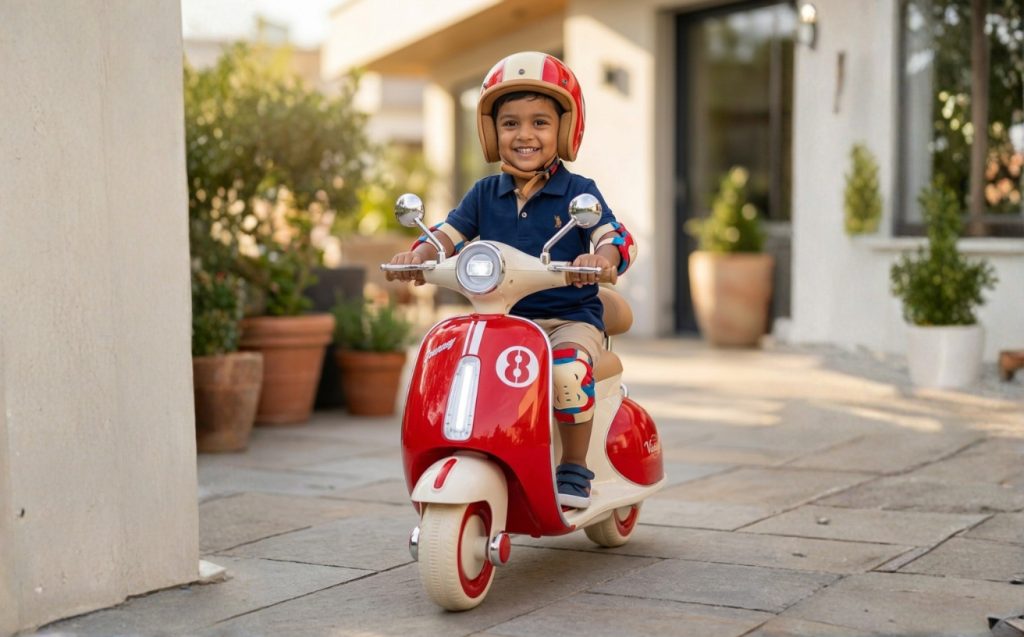
Safe Kids Worldwide, a U.S. child-injury prevention organization, advises pairing any riding toy with a properly fitted helmet and reviewing the manufacturer’s instructions before first use, guidance that applies just as much to the electrical side of a scooter as to the riding itself. Separately, the U.S. Consumer Product Safety Commission has previously recalled battery-powered ride-on toys after reports of overheating components, a reminder that battery and charger mismatches are not just a performance issue but a safety one.
Frequently Asked Questions
How long does it take to charge a kids electric scooter?
Most 6V kids’ scooter batteries take 8 to 12 hours for the first charge and 6 to 8 hours for routine recharges afterward. Charging time depends on the battery’s amp-hour rating, so always check the specific charge time listed for your model before assuming a shorter charge is complete.
How long does a kids electric scooter battery last?
A well-maintained sealed lead-acid battery typically lasts 2 to 3 years of regular use before its capacity drops enough to need replacement. Batteries that are frequently left fully discharged or charged with a mismatched charger often fail within the first year instead.
Can I overcharge my child’s electric scooter?
Leaving a scooter connected to its original charger for a day or two beyond a full charge rarely causes damage, since most chargers include an automatic cutoff. Regularly leaving it connected for days at a time, or using a non-matching charger, does increase the risk of battery stress over time.
What should I do if my kids electric scooter won’t charge?
First check that the charger is fully seated in both the wall outlet and the scooter’s port, since a loose connection is the most common cause. If the charger light never activates or the battery stays cold during charging, the battery or charger likely needs professional testing or replacement.
Is it safe to let my child charge their own scooter?
No, charging should always be handled by an adult, since it involves mains electricity and a battery compartment that is not designed for small hands. Kids electric scooter battery care includes keeping the charging step itself out of a child’s daily routine entirely.
How do I know when to replace the scooter battery?
Replace the battery once it can no longer hold a charge for more than a few minutes of riding, shows physical swelling or cracking, or gets noticeably warm during a normal charge. At that point, a fresh battery restores performance far more reliably than continued charging attempts.
Keep Every Ride Powered Up
Kids electric scooter battery care is mostly about consistency: a full first charge, a recharge after every ride instead of after every empty battery, and a monthly top-up whenever the scooter sits unused. These few habits are the difference between a battery that fades within months and one that keeps a scooter like the Kids Premium Vintage Vespa Baby Electric Scooter running for several riding seasons.